Commercial Data Cabling
Copper cabling for workstations, phones, printers, access points, cameras, and other IP devices in commercial spaces.
Commercial low-voltage infrastructure
Corenexxus plans, installs, labels, and tests Cat6, Cat6A, and fiber optic cabling for commercial buildings across [PRIMARY SERVICE AREA]. From new buildouts to occupied-site upgrades, we deliver orderly infrastructure your team can understand and maintain.
Infrastructure services
From work-area outlets to the telecommunications room, Corenexxus installs the copper and fiber infrastructure commercial facilities depend on.
Copper cabling for workstations, phones, printers, access points, cameras, and other IP devices in commercial spaces.
Category-rated cable, jacks, patch panels, and terminations selected for the distance, environment, and project specification.
Organized horizontal and backbone wiring between work areas, equipment rooms, and connected building devices.
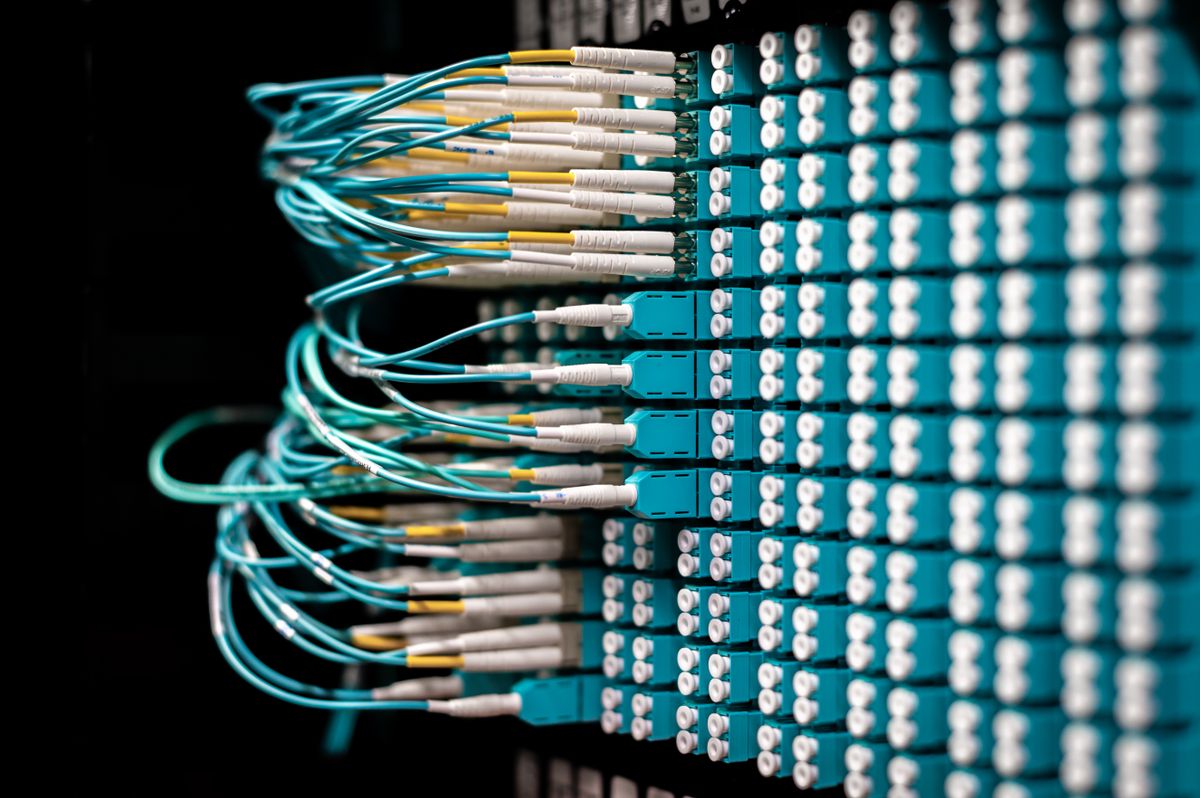
Single-mode and multimode fiber installation, termination, and testing for backbones and high-capacity links.
Cable pathways and low-voltage infrastructure coordinated with device locations, ceiling conditions, and project schedules.
Rack installation, patch-panel termination, cable dressing, labeling, and closet cleanup for easier serviceability.
Cabling for readers, request-to-exit devices, controllers, and related components, coordinated with the system provider.
Category and fiber cabling for IP cameras, wireless access points, recording locations, and equipment-room uplinks.
The physical layer matters
Reliable devices begin with well-planned pathways, cable, terminations, and equipment-room organization. Corenexxus builds that physical layer for commercial buildings.
How projects move
A well-run cabling project starts with the building, device count, pathways, equipment rooms, access requirements, and schedule.
We collect plans, device counts, cable requirements, access constraints, and confirm routes, distances, and equipment-room needs.
Cable is placed, supported, terminated, dressed, and coordinated around the approved schedule and other project trades.
Connections are identified at both ends, tested to the agreed scope, and handed off with [CLOSEOUT DOCUMENTATION].
Commercial project types
Corenexxus supports commercial projects across [PRIMARY SERVICE AREA], coordinating cabling pathways, device locations, equipment rooms, installation timing, labeling, and testing around real building conditions.
Proof you can inspect
A professional cabling handoff should leave the customer with more than working ports.
Frequently asked
Direct answers about cable types, occupied-site work, testing, network closets, fiber, security-system cabling, and project estimates.
Structured cabling is an organized system of copper or fiber cable, outlets, patch panels, racks, and telecommunications spaces. It provides the physical connections used by computers, phones, wireless access points, cameras, access-control equipment, and other building systems.
Yes. Corenexxus installs Cat6 and Cat6A cable, jacks, and patch panels. The appropriate category depends on distance, performance requirements, interference conditions, equipment, budget, and the project specification.
Corenexxus installs and tests [SINGLE-MODE / MULTIMODE—CONFIRM] fiber for equipment-room backbones, long-distance connections, and [INTER-BUILDING LINKS—CONFIRM]. Add fusion splicing to the scope only if that service is confirmed.
Yes. Network-closet work can include cable tracing, abandoned-cable review, patch-panel organization, relabeling, rack installation, and cable dressing. The exact scope is documented before changes are made.
Yes. Corenexxus installs cable infrastructure for IP cameras and access-control devices. Hardware installation, system programming, monitoring, and licensing are included only when specifically confirmed or handled by the customer’s system provider.
Physical cabling is the primary service. Limited switch installation, wireless access-point placement, and basic project turn-up may be available when requested. Corenexxus can also coordinate directly with the customer’s IT provider.
Provide the project address, building type, floor plans if available, estimated number of drops, cable category, device locations, equipment-room details, required testing, access restrictions, and desired completion date.
Send the project location, plans if available, estimated cable count, connected-device types, and target completion date. Corenexxus will review the scope and identify the next step.